
Air-cooled heat exchangers
Fin-fan coolers for sites without water to spare
An air-cooled exchanger rejects heat straight to ambient. No cooling tower, no make-up water, no water treatment chemicals, no blowdown. Across inland Egypt and the Gulf that is usually the difference between a plant that runs and one that argues about water allocation.
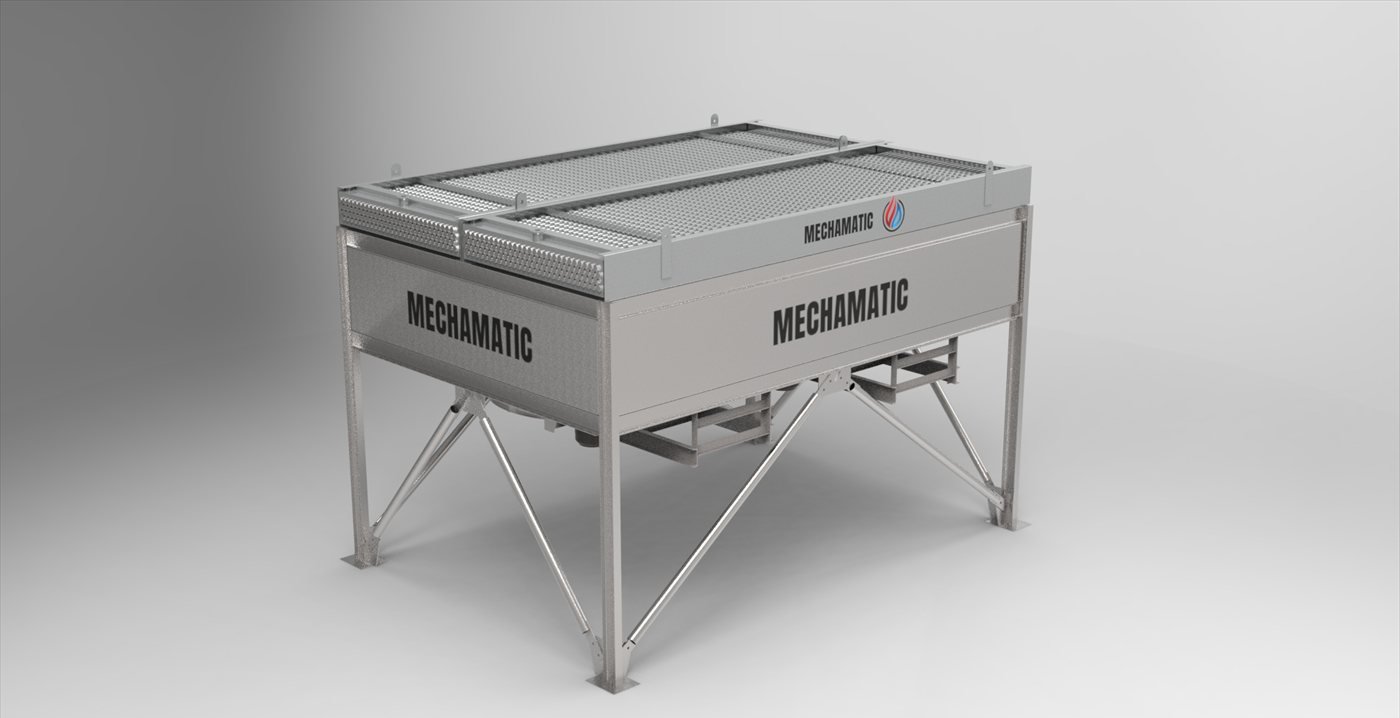
Why air-cooled
The water you do not use is the cheapest water there is
A water-cooled system looks cheaper on the purchase order and then bills you for the rest of its life: make-up water, treatment chemicals, blowdown disposal, tower maintenance, pump power, and a Legionella management plan. An air-cooled unit trades all of that for fan power and a larger footprint.
- No cooling water, make-up or blowdown
- No cooling tower, tower basin or water treatment programme
- No water-side fouling or scaling on the process surface
- Can be sited anywhere with clear air — including remote and desert locations
- Fan power can be turned down or staged when ambient drops at night and in winter
- Long service life; the tube side is the only wetted surface
The honest trade-off: an ACHX cannot cool below ambient, needs more plot area, and its performance moves with the weather. Where you need a low, stable outlet temperature year-round, a shell & tube unit on cooling water or a trim cooler after the ACHX is the better answer.
How it is built
Five assemblies, and each one matters
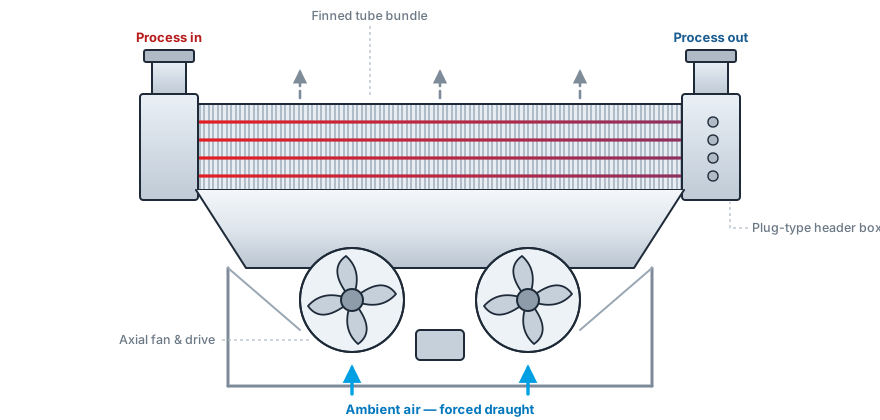
You can see all of them in our ACHX animation. The labelled section below shows how the parts sit relative to each other.
Finned tube bundle
Air is a poor heat transfer medium, so the outside area is multiplied with fins — typically 15 to 25 times the bare tube area. Aluminium fins are wound, extruded or embedded onto the tube depending on service temperature.
Header boxes
The pressure part that distributes and collects the process fluid. Plug-type headers carry a removable plug opposite every tube so the tubes can be rodded; cover-plate and bonnet headers give full access at once.
Fans and drives
Axial fans with aluminium or FRP blades, driven through belts or a gearbox. Auto-variable or manually adjustable pitch lets you trim capacity as ambient changes instead of throttling the process.
Plenum
The transition between fan ring and bundle face. Get this wrong and air short-circuits around the bundle edges, so the nominal area does nothing. Box or transition plenums to suit the fan-to-bundle ratio.
Structure
Columns, braced bents and walkways carrying the bundle at working height, designed for wind and seismic loading, with maintenance access to the fans and drives.
Controls
Fan staging, variable-frequency drives, louvres or recirculation for winterisation, so the outlet temperature holds through a 25 °C swing in ambient.
Forced vs induced draught
Where the fan sits changes the whole unit
| Forced draught (fan below) | Induced draught (fan above) | |
|---|---|---|
| Fan handles | Cool ambient air — denser, so less fan power for the same mass flow | Hot discharge air — more volume, more power, higher blade temperature |
| Air distribution | Less even across the bundle face | More even; the bundle acts as its own distributor |
| Hot air recirculation | More prone to it — discharge is slow and close to the inlet | Much less prone; discharge velocity throws air clear |
| Maintenance access | Easy — fans and drives at grade level | Harder — requires access platforms above the bundle |
| Process outlet temperature | Higher effective ambient; slightly larger surface needed | Closer approach to true ambient achievable |
| Typical choice | Most duties, especially high process temperature | Where a close approach or low recirculation is critical |
One practical note: induced draught limits process inlet temperature, because the fan and its bearings sit in the hot discharge stream. Above roughly 175 °C outlet air, forced draught is normally the only sensible option.
Designing for the region
An ACHX designed for 25 °C will disappoint you in July
This is where most imported air-cooled units fall over on Egyptian and Gulf sites. The design ambient is not an average — it is the temperature you still need the plant to make rate at.
Pick the design ambient honestly
We size against a summer design dry-bulb you nominate — commonly 45 °C or higher inland — not an annual mean. Then we show you the performance curve across the full ambient range so there are no surprises in August.
Guard against recirculation
Hot discharge air drawn back into the inlet raises the effective ambient by several degrees and quietly destroys capacity. Bundle elevation, fan discharge velocity and spacing from adjacent equipment and buildings are all checked.
Design for dust and sand
Fin blockage is the main fouling mechanism here, not water scale. Wider fin spacing, accessible bundle faces and provision for periodic washing keep the surface working between turnarounds.
Turn capacity down, not off
Ambient can swing 20 °C between afternoon and night. Fan staging, VFDs or variable-pitch blades hold the process outlet steady and cut fan power when the air is doing the work for free.
Design envelope
Specification options
Extruded fins
Aluminium sleeve extruded over the tube, so the fin base fully encases it. Best corrosion protection for the tube and stable bond at high temperature.
Embedded (G-fin)
Fin strip wound into a machined groove and locked in place. Holds thermal contact at the highest service temperatures.
Wound (L-foot)
Tension-wound strip with a footed base. The most economical option for moderate temperature, non-corrosive atmospheres.
Common questions
Air-cooled questions we are asked
Whenever cooling water is scarce, expensive or troublesome. An air-cooled unit removes the cooling tower, make-up water, water treatment chemicals, blowdown disposal and water-side fouling entirely, and trades all of it for fan power and a larger plot area. The honest limits: it cannot cool below ambient, its performance moves with the weather, and it needs more space. Where you need a low, stable outlet temperature year-round, a water-cooled shell and tube unit or a trim cooler downstream is the better answer.
Not an annual average. The design ambient is the temperature at which the plant must still make rate, so inland Egyptian and Gulf sites are commonly sized against a summer design dry-bulb of 45 °C or higher. This is where imported units most often disappoint: an exchanger sized for 25 °C will not hold its duty in July. We size against the figure you nominate and then show the performance curve across the full ambient range.
Forced draught puts the fans below the bundle so they handle cool, dense air, which means less fan power, and it keeps the fans and drives at grade for easy maintenance. Induced draught puts them above, giving more even air distribution, much less hot-air recirculation and a closer approach to ambient, at the cost of more fan power and access platforms. Above roughly 175 °C outlet air temperature, forced draught is normally the only sensible option because the fan bearings would otherwise sit in the hot stream.
Fin blockage, not water scale, is the main fouling mechanism on regional sites. We specify wider fin spacing, keep the bundle faces accessible, and make provision for periodic washing so the surface can be restored between turnarounds. Bundle elevation and clearance from adjacent equipment are also checked, because recirculated hot air raises the effective ambient by several degrees and quietly destroys capacity.
Cooling something without cooling water?
Tell us the duty and your summer design ambient. We will size the bundle and the fans.