
Industries served
Every sector has one constraint that governs
In a refinery it is code compliance and turnaround access. In a dairy it is cleanability. In a desalination plant it is chlorides. Knowing which constraint governs is most of the design decision — so here is how we read each sector.
Oil & gas
Upstream, midstream and refining
The governing constraints are code compliance, sour service where H₂S is present, and the fact that you only get access during a turnaround. Equipment has to be inspectable within that window.
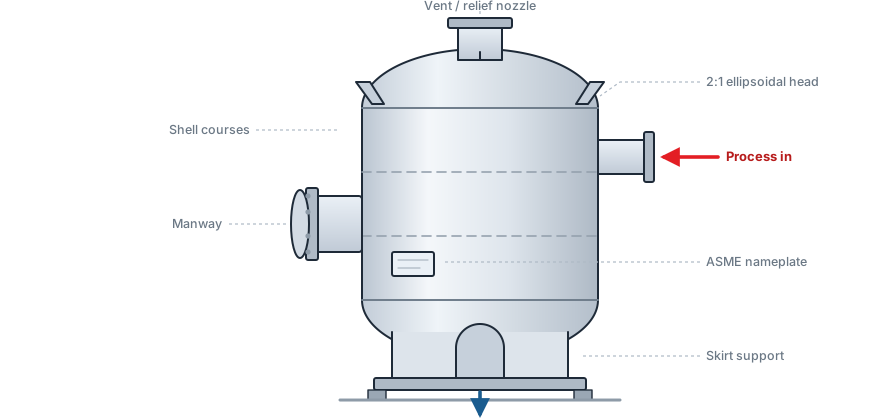
- Two- and three-phase separators with sized internals
- Knock-out drums ahead of compressors and flares
- Gas coolers and aftercoolers, air-cooled or water-cooled
- Process exchangers in floating-head configuration for full cleaning access
- Produced water and slug catcher vessels
- Condensate and surge drums
Where sour service applies, material selection and hardness control follow NACE requirements — tell us at enquiry stage so it is designed in, not bolted on.
Petrochemical & chemical
Where the fluid attacks the equipment
Corrosion drives everything. The right answer is often not the most exotic alloy but the cheapest one that survives the actual service — and knowing the difference is worth real money on a large order.
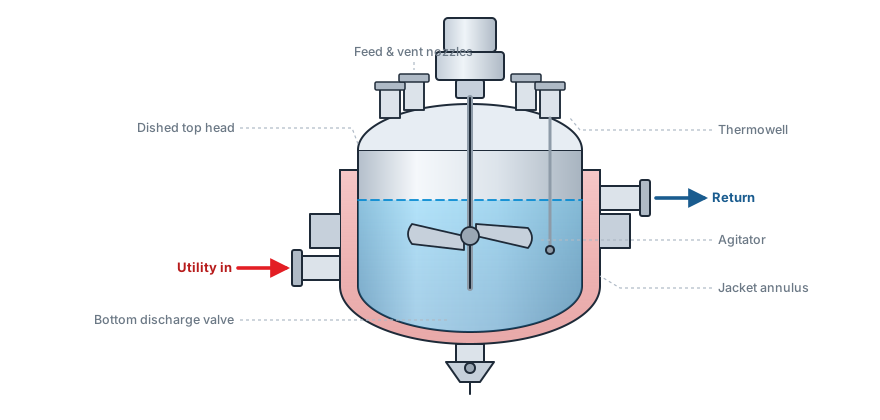
- Jacketed and limpet-coil reactors with integrated agitation
- Process exchangers in stainless, duplex and nickel alloys
- Chemical storage tanks with lining systems
- Dosing and blending skids
- Column internals, reboilers and condensers
- Clad and weld-overlay construction where solid alloy is uneconomic
Food & beverage
Cleanability beats every other consideration
Hygienic design is geometry, not polish. Fully drainable, no dead legs, no crevices for product to lodge in, and every internal surface reachable by the CIP spray pattern.
- Sanitary shell & tube and tube-in-tube exchangers for pasteurising and cooling
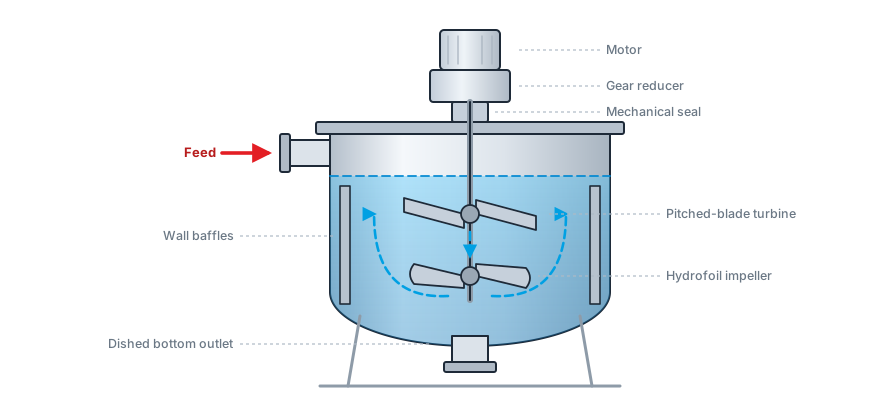
- Jacketed mixing, holding and blending tanks
- CIP skids with heating, dosing and return
- Storage and buffer tanks in polished 316L
- Brewery and distillery vessels
- Double tubesheet construction where cross-contamination is unacceptable
Internal surface finish is measured and recorded to the Ra value you specify, not described as “food grade” and left at that.
Pharmaceutical
If it is not documented, it did not happen
The equipment matters, but the paperwork is what gets it into a validated plant. Surface finish, material traceability, weld records and slope-to-drain all have to be evidenced.
- Electropolished and mechanically polished reactors and vessels
- Documented Ra measurements on all product-contact surfaces
- Full material traceability including gaskets and seals
- Orbital-welded and crevice-free internal joints
- Slope-to-drain geometry with verified drainability
- Documentation packages to support IQ and OQ
Water & desalination
Chlorides decide the material list
Ordinary austenitic stainless pits and cracks in seawater. This is the one sector where specifying 316L out of habit will cost you the equipment.
- Titanium Gr. 2 exchangers for seawater, brine and hypochlorite
- 90/10 and 70/30 cupronickel bundles for marine cooling
- Duplex 2205 vessels and piping for brackish and high-chloride duty
- Chemical dosing tanks and skids — acid, caustic, antiscalant, hypochlorite
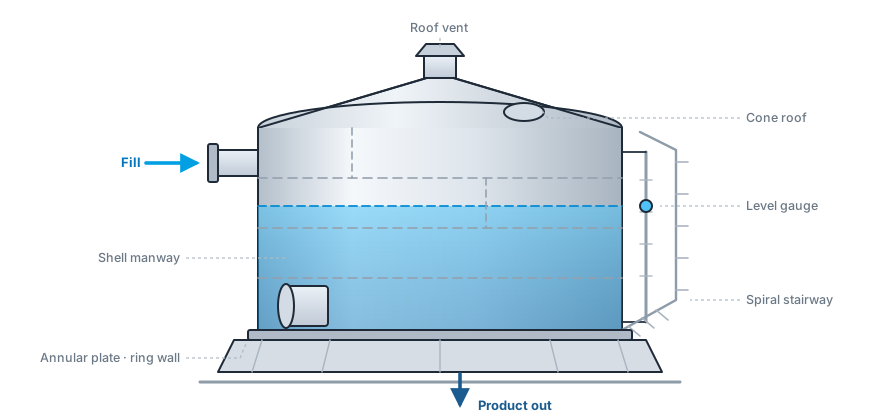
- Fire-water and process water storage tanks
- Rubber- and epoxy-lined carbon steel where lining beats alloy on cost
Power & utilities
The boiler house and the machine hall
Lube-oil coolers
Turbine and compressor lube-oil cooling, water-cooled or air-cooled.
Generator & jacket coolers
Engine jacket water and generator cooling for gensets and CHP plant.
Steam condensers
Surface condensers and auxiliary condensing duty.
Deaerators
Storage sections and vent condensers for boiler feedwater.
Blowdown vessels
Flash and blowdown vessels with heat recovery where it pays.
Air receivers
Instrument and service air storage with correct drainage and relief.
HVAC & general industrial
Utility-side heat transfer
Compressor aftercoolers
Intercoolers and aftercoolers with condensate separation.
Chiller-side exchangers
Plate-and-frame alternatives in shell & tube for higher pressure duty.
Heat recovery
Recovering waste heat to preheat water, air or process feed.
Hydraulic oil coolers
Press, injection moulding and heavy machinery oil cooling.
Injection moulding
Mould temperature control and tool cooling circuits.
Buffer vessels
Thermal buffers and expansion vessels for closed circuits.
Cement, fertiliser & minerals
Abrasion, dust and high temperature
Hoppers & silos
Conical and pyramidal discharge with wear plate and flow aids.
Gas cooling
Cooling dust-laden gas streams ahead of filtration.
Ducting & cyclones
Ducting, expansion joints, cyclones and stacks.
Slurry tanks
Agitated slurry hold-up with rubber lining or wear allowance.
Heat recovery
Waste heat recovery from kiln and cooler exhaust.
Acid service vessels
Phosphoric and sulphuric duty in lined or alloy construction.
Beyond our own equipment
For most of the sectors above we also represent selected international equipment manufacturers — instrumentation, exchanger and vessel components, valves and rotating equipment among them — so a duty outside what we build ourselves is often still one we can source and support. Representation & partnerships
Not sure which constraint governs your duty?
Describe the service. We will tell you what will actually limit the design.